Monday, December 30, 2013

Writing Assignment

·      Write about your plans and hopes for the new year
·      Write about what you learned in this class
·      Write about what you liked and didn’t like

·      Write about what you thought and learned from the UN Game

Sunday, December 29, 2013

BREAKING NEWS!!

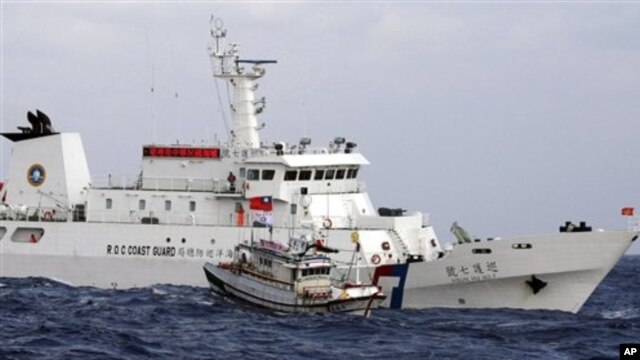
This just in! After proclaiming a tariff on all trade goods in their territorial waters, Giant Bear dispatched the Coast Guard to patrol and collect the tariff. 

During a routine stop, they encountered several ships from the Republic of the Union of Monster, including some of Monster's Navy ships.

One of the Monster ships fired on the Giant Bear Coast Guard ship. There was severe damage to the ship and the captain died. The ship itself sunk and the crew had to be rescued. Immediately protests have begun in Giant Bear, Shenkulian of Raju, and Panem about the incident.

Press Releases

BBNN (Big Bear News Network)
Press Releases –

Shenkulian of Raju:
-          Announces alliance with Panem and Giant Bear
-          Announces separate alliance with Cha Ji Er
-          Vows to expand army presence into the south, close to the border with Monster
-          Offers to provide food to Giant Bear and Cha Ji Er
-          Offers to provide arms and support to Cha Ji Er
-          Announces a customs duty  of 17.6% on external imports

Republic of the Union of Monster:
-          Has close relations with Stitch and Ching Hsueh, but doesn’t confirm alliance
-          Vows to invade Cha Ji Er to increase its territory
-          Wants to use SMC money to advance their industry, but doesn’t confirm membership in SMC Union

People’s Republic of Ching Hsueh:
-          Announces alliance with Stitch and Monster (not confirmed)
-          Vows to fight Cha Ji Er to regain lost territory
-          Promises to change to a democracy at the right time
-          Announces the foundation of the SMC Union with Stitch and Monster (not confirmed)
-          Announces the creation of SMC dollars

Giant Bear Federation:
-          Pleads for help with its food crisis
-          Announces alliance with Raju and Panem
-          Announces a tariff on all trade through their territorial waters
-          Tariff will be collected in food or money

Cha Ji Er:
-          Announces alliance with Raju
-          Confirms offer of military help from Raju
-          Announces that they will fight all aggressors because Raju will help
      
Democratic People’s Republic of Stitch:
-          Has close relations with Ching Hsueh and Republic of the Union of Monster, but doesn’t confirm alliance
-          Desires to develop its green industry
-          Wants to become a “green country”
-          Doesn’t confirm SMC Union

Rocky Mountain Panem
-          Announces alliances with Raju and Giant Bear
-          Claims Raju will protect them from aggression

-          Promises to help Giant Bear with their fish problem

Monday, December 23, 2013

Country Descriptions

Bigbearlandia

Official Name: Shenkulian of Raju
Short Name: Raju
Population: 527,000,000                                 Spoken Language(s): Bananam and RaJuan
Government Type: Democracy                       Religion: Despicable Me
Leader: President Judy                                   Ambassador: Rainy

Short Description:
Like its neighbor, Republic of the Union of Monster, Shenkulian of Raju (or Raju for short) was once part of the nation of Rocky Mountain Panem. Raju won its independence peacefully in 1800. Later, Raju assisted Panem in its civil war with Monster. They remain good friends. After independence, Raju became a democracy and has prospered.  The first president, Luke Kuna, served for 30 years and helped dramatically improve Raju’s economy. The second president,  Johnny Sea, also served for 30 years and led Raju to become not only the richest nation in Bigbearlandia, but also a world leader and champion of justice. Recently, they elected their first woman president, Judy, who won by promising to help bring peace, democracy, and vegetables to the whole of Bigbearlandia. 


Official Name: People’s Republic of Ching Hsueh
Short Name: Ching Hsueh
Population: 322,000,000                                 Spoken Language(s): Taiwanese
Government Type: Communist                       Religion: None allowed
Leader: Super Flora                                        Ambassador: Heroine April

Short Description:
For the past 900 years, the People’s Republic of Ching Hsueh was filled with “People’s Communesthat were self-sufficient in agriculture. After the Great Leap Forward in the last century, however, Ching Hsueh grew into a giant industrial nation. Though it is now rich and prosperous, the People’s Communes have been largely abandoned, meaning there are many people without food. Although Ching Hsueh is a world leader in technology, industry, and military power, they are often not respected because of their poor human rights record. They have tried to improve their image with increased tourism, but have so far been unsuccessful. Food shortages and pollution remain major problems. Same-sex marriage has recently been outlawed and Ching Hsueh executes prisoners daily. They are also often accused of brainwashing their young people. Ching Hsueh recently lost control of Cha Ji Er, which used to be a colony.


Official Name: Cha Ji Er
Short Name: CJE
Population: 12,490,000                                   Spoken Language(s): Thai & Mandarin
Government Type: Theocracy             Religion: Buddhist
Leader: Dalai Claire                                        Ambassador: Angel

Short Description:
Cha Ji Er is a Buddhist theocracy situated on an island chain in the Shengkung Sea. It has a long history of being invaded and controlled by other nations. Most of the conquerors were interested in CJE’s diamonds, which are beautiful, abundant, and highly valuable. 20 years ago, Dalai Claire led her people in a revolution against Ching Hsueh and gained independence. Although claiming to be peaceful and Buddhist, Dalai Claire is very paranoid and spies on all her citizens. It is said that there are more than five spy cameras in every house and public building. As a Buddhist theocracy, the people of CJE are forced to adhere to strict moral and legal principles. They must be vegetarian, meditate three times a day, and must work in the diamond mines. CJE’s biggest problems are feeding their people, who are so busy mining diamonds they don’t have time to farm, and preventing another takeover from jealous neighbors.


Official Name: Republic of the Union of Monster
Short Name: Monster
Population: 103,000,000                                 Spoken Language(s): English
Government Type: Military Junta                   Religion: Catholic
Leader: Generalissimo Amy                           Ambassador: Shelley

Short Description:
Like its neighbor, Shenkulian of Raju, The Republic of the Union of Monster used to be part of the great nation of Rocky Mountain Panem and was ruled by their queen. After watching Raju gain independence, Monster started a bloody civil war with Panem to win their freedom. After 25 years of fighting, Monster was finally independent and Panem is left with small territory in the mountains. Monster has always been jealous of Raju and its great wealth, especially since Raju helped fight for Panem in the civil war. Monster is ruled by a military junta, primarily Generalissimo Amy, who rule the country with an iron fist. No freedoms of any kind are allowed, even though Monster is technically a Catholic nation. Recently, oil was discovered in the northern highlands of Monster, close to Raju and Panem. This might be the secret to Monster becoming the major world power it has always wanted to be.


Official Name: Rocky Mountain Panem
Short Name: Panem
Population: 233,000                                        Spoken Language(s): Panemanian
Government Type: Constitutional Monarchy Religion: Islam
Leader: Royal Queen Angel                           Ambassador: Lucy

Short Description:
Years ago, the whole continent was called the Great Nation of Panem, ruled by a glorious line of Royal Queens. Alas, that was the past. After granting independence to the Shenkulian of Raju and losing a bloody civil war to the Republic of the Union of Monster, Panem has been greatly reduced in size and power. She is now a small mountain nation with few resources and few people. Royal Queen Angel has made sure that her citizens are well-fed and well-clothed and have a few luxury items, but overall Panem is a poor nation. Worse than that, it must depend on the support of Raju to survive. Worst of all, Monster is always threatening to finish the civil war and eliminate Panem once and for all. The Royal Queen must do what she can to protect her people and find a way forward.


Official Name: Democratic People’s Republic of Stitch
Short Name: Stitch
Population: 69,000,000                                   Spoken Language(s): Stitchenese
Government Type: Dictatorship                     Religion: Stitchian
Leader: Queen Ivonne                                                Ambassador: Michelle

Short Description:
The Democratic People’s Republic of Stitch is an odd country. Its people are not related to any others in Bigbearlandia. They speak a strange language, Stitchenese, that virtually no one can understand. They practice a bizarre religion, Stitchian, which instructs that Queen Ivonne must be worshipped like a god. In reality, Queen Ivonne is a heartless dictator who rules Stitch for her own benefit and little else. Her people are even more desperate and pitiful than those of neighbor Ching Hsueh. The country itself has enough food and has a very strong army, but to improve its place, Stitch must make alliances or find some other way of improving its industry and economy.


Official Name: Giant Bear Federation
Short Name: Giant Bear
Population: 1,233,000                                     Spoken Language(s): English, Mandarin, Taiwanese
Government Type: Democracy                       Religion: Animist
Leader: President Leona                                 Ambassador: Sandy

Short Description:
The Giant Bear Federation is a truly peaceful democracy, whose people are active participants in their democracy. As an island nation, they have not been involved in the many wars that have ravaged Panem or the continent across the Shengkung Sea. However, Giant Bear has also been left behind by economic development. Though her people excel in making beautiful and valuable bear-skin rugs, bear-skin coats, and bear hats, there is little industry on the island. They are also renowned for creating very very expensive purses and other fashion accessories. Giant Bear’s people have long depended on fishing to feed themselves, but recently it seems most of the fish in the Shengkung Sea have died, leaving Giant Bear without a source of food. Many people believe the fish have died because of pollution from Panem and all its factories.

Week One Resources

Country Oil Food Textiles Industrial Goods Luxuries Arms Total
Republic of the Union of Monster 1 1 0 1 1 1 5
Shenkulian of Raju 1 1 1 2 1 3 9
Cha Ji Er 1 1 1 1 2 0 6
Ching Hsueh 1 1 1 1 2 2 8
Rocky Mountain Panem 1 1 1 1 1 0 5
Stitch 0 1 1 1 0 1 4
Giant Bear 1 0 2 0 2 0 5
Total 6 6 7 7 9 7 42

Original Resources

Country Oil Food Textiles Industrial Goods Luxuries Arms Total
Republic of the Union of Monster 3 0 0 1 0 1 5
Shenkulian of Raju 0 3 1 2 0 3 9
Cha Ji Er 1 0 1 1 3 0 6
Ching Hsueh 2 0 0 3 2 1 8
Rocky Mountain Panem 0 2 2 0 1 0 5
Stitch 0 1 1 0 0 2 4
Giant Bear 0 0 2 0 3 0 5
Total 6 6 7 7 9 7 42

Week One Trades

Trade 1
Ching Hsueh             Panem
1 Oil                         1 Food
1 Indutrail Good        1 Textile

Trade 2
Raju                          Cha Ji Er
1 Food                      1 Luxury

Trade 3
Giant Bear                  Monster
1 Luxury                     1 Oil

Trade 4
Stitch                           Ching Hsueh
1 Arms                        1 Industrial Good

Trade 5
Raju                            Monster
1 Food                        1 Oil

The UN Game

Welcome to Bigbearlandia:

You have been given a card with information about your country and a map of your world.
You will notice that the population for each country is dramatically different. Raju has 527 Million people while Panem has only 233 Thousand…why? Because the world is not fair.

On your card, you also have resources. Oil, Textiles (clothing), Food, IG (Industrial Goods such as cars, ipods, etc.), Luxuries (diamonds, furs, spices, etc.) and Arms (things used to defend your country).
If you have 0 of any resource, that means you have a demand for that resource that affects your country in a negative way. So you need to solve that problem.
1 means you have enough. You CANNOT trade that resource.
2 means you have a surplus and can trade 1 resource to another country.
3 means you have a major surplus and can trade 2.

When you trade with a country, you establish a Trade Route with that country. Trucks or ships will leave your country and travel to theirs with the resource. You will continue to supply that resource until the trade is renegotiated.

NOTE: You don’t have to trade directly to one country. (example: 1 Oil from you for 1 Food from them.) You can do multiple country trade agreements. (example: Country A supplies arms to B who supplies oil to C who then supplies textiles to A.)

Today you have two jobs:

1.      During the Stock Market part of class, you must solve your shortage problem. (NO TRADE is BAD)
2.      After the Stock Market, you need to establish Talks with other countries. You are welcome to travel to as many countries as you can in the time given or to organize a Summit You can make Alliances, talk about ideas to increase the availability of certain resources, or draft joint statements about global issues (war, slavery, free speech, the environment, religious freedom, education, etc.)
3.      Finally, we will have our first UN meeting. At the meeting, each country will be required to make an official statement to the United Nations about a topic of their choosing.
4.      Before the statements, we will choose one student to be the Secretary General of the UN.
5.      At the end of class, give Dustin your resource card, and a copy of your official statement, plus any trade agreements or treaties.

RULES:          1. Countries are allowed to speak their “native language” in their home country, but must speak ENGLISH when talking to other countries.
                        2. Dustin is the only one allowed to change resource numbers on resource cards; he must approve all trades.
                        3. All international business must occur during class time.


Monday, December 16, 2013

The UN Game

Information to Email to Peter

1) Country's Official Name
2) Country's Short Name
3) Flag (send a digital picture)
4) Spoken Language(s)
5) Religion
6) Government Type
7) Name of leader (with title) and ambassador
8) Write 1-2 paragraphs about your country's history, culture, and anything else important

email to: pichanpete@yahoo.com

Next week, Peter will give you:
- a map
- information about your country (size, population, economy, etc)

Monday, December 9, 2013

Security Summit on Modern Warfare

Purpose: Addressing the use of drones in warfare

Participating nations:
USA - Leona
UK - Shelley
China - Flora
Russia - Rainy
India - Michelle
Pakistan - Lucy
Afghanistan - Sandy
Iran - April
Taiwan - Ivonne
Iraq - Claire
Kenya - Amy
Egypt - Angel S1A
Venezuela - Judy
Mexico - Angel S1F


Does your country use drones?

Has your country been the victim of drone attacks?

What is your country's position on drones?

Should drones be allowed? What are some possible alternatives?

1) Read the article posted earlier

2) Research your country
             a) Use of drones
             b) Attacks by drones
3) Research the use of UAV's (drones)
              a) What are they? Who uses them? Why? What are the costs?
4) Prepare a short speech (30 sec to 1 min) about your country's position on the use of drones

Each country will present their short speech on the use of drones
Then there will be a discussion and we must come to an agreement about the use of drones

Living Under Drones

Here is an article about drone warfare:
http://www.livingunderdrones.org/

Read the article and browse around the website. Also, find information that supports the use of drone warfare. Compare the two opinions.


Monday, December 2, 2013

East Asia Cooperation Summit

Purpose: “Ease tensions in East Asia, specifically concerning the new ADIZ proposed by China”
1) Read the article posted earlier
2) Research your country
                a) Territorial claims (maritime claims)
                b) your country’s position on the new ADIZ
3) Research the ADIZ
                a) What is it? Who wants it? What does it mean? What will happen? How will China enforce it?
4) Prepare a short speech (30 sec to 1 min) about your country's position on the ADIZ
                - What does your country think about the ADIZ?
                - What does your country think should be done about the ADIZ?
                - What is your country worried about regarding the ADIZ?

Each country will present their short speech on the ADIZ. 
Then there will be a discussion and we must come to an agreement about the ADIZ

The ADIZ and China

China Makes Waves with ADIZ


Read this article to understand the conflict in East Asia.

And it's possible extension to the South China Sea

Monday, November 25, 2013

Find Someone Who …..
uses Facebook everyday ___________________________

likes basketball ___________________________

didn’t eat breakfast today ___________________________

drank tea this morning ___________________________

hugged somebody today ___________________________

thinks One Direction is great ___________________________

wants to go to Korea ___________________________

thinks the teacher is fat ___________________________

is angry at someone ___________________________

washes the dishes everyday ___________________________

didn’t take a shower today ___________________________

is happy to be in class ___________________________

doesn’t know your English name ___________________________

watched the new Hunger Games movie ___________________________

wants to go to sleep right now ___________________________

loves to eat Dong Shan Duck Head (東山鴨頭)___________________________

loves to drink vinegar () ___________________________


Questions: Do you?                Are you?             Did you? 

Monday, November 11, 2013

Monday, November 4, 2013

Contraception Ignorance in Taiwan

Web site set up to help combat contraception ignorance in Taiwan
了解避孕知識別害羞 婦科醫師線上解答

Chen Ching-hui, a doctor in Taipei Medical University Hospital’s Department of Obstetrics and Gynecology, is talking about unexpected pregnancies among teenagers in Taiwan. Every year obstetricians and gynecologists in Taiwan prescribe tens of thousands of abortion pills to pregnant teenagers. Sighing with emotion, Chen says that every year on Sept. 26, World Contraception Day is supposed to remind everyone about the importance of contraception.
Chen says that in European countries such as Germany and France more than 50 percent of teenagers are having sex, while that number is only 20 to 30 percent in Taiwan. Despite that, the rate of abortion in Taiwan is seven times that of Germany and France, which shows just how ineffective sex education in Taiwan. Teenagers in Taiwan lack knowledge about contraception and have nowhere to turn. Becoming pregnant unexpectedly without ways to financially support themselves, young mothers have no means to take care of the child and have a difficult time staying in school or getting a job.
Taiwanese teenagers get most of their knowledge about contraception from the Internet, and mistakenly assume that safe period calculation methods or coitus interruptus is sufficient protection, or that taking birth control pills will cause cancer, or make them barren or gain weight. All of these ideas are unsafe, Chen says. The condom-pill method — the male wears condoms and the female takes birth control — is currently considered to be the most effective contraceptive method among doctors, preventing both the transmission of venereal diseases and avoiding pregnancy.
To actively combat this issue and help teenagers answer all their perplexing questions regarding sex and contraception, the Taiwan Association of Obstetrics and Gynecology recently started a Web site specifically aimed at providing counseling online for teenagers seeking information about contraception (www.8181.org.tw). The site provides accurate sex education info and a platform where medical professionals can offer replies to messages, as well as a navigable guide on contraception and useful medical and pharmaceutical organizations.
A printed version of the guide is available at most medical providers, and there is a free 24-hour hotline that provides professional counseling (0800-25-8181).
(Liberty Times, Translated by Kyle Jeffcoat)
台北醫學大學附設醫院婦產科主治醫師陳菁徽表示,青少女經期較不規則,容易忽略自身狀況,意外懷孕的案例很多,台灣婦產科醫師每年開出好幾萬顆墮胎藥。陳菁徽感嘆,婦產科醫師的天職是不該鼓勵人墮胎的,每年的九月二十六日是世界避孕日,就是提醒大家正視意外懷孕這個議題。
陳菁徽指出,歐洲國家如德國、法國,未成年性行為比例超過五成,台灣只有二、三成,但是台灣的墮胎率卻是德、法的七倍,這顯示台灣性教育落實不足,青少年避孕知識不足、求助無門,意外懷孕後,又因沒有經濟能力,導致孩子扶養、小媽媽就學與就業都陷入困境。
台灣青少年的避孕知識大多來自網路,常誤以算安全期、體外射精就可以了,又誤以為吃避孕藥會致癌、不孕、發胖。陳菁徽表示,這些都是不保險,甚至錯誤的觀念和方法。目前醫界認為最有效的避孕方法就是「保避(保庇)」,也就是以男性戴保險套杜絕性病傳染,女性服用避孕藥防止懷孕。
為了主動出擊、協助青少年男女解答心中對於兩性與避孕的疑惑,婦產科醫學會即日啟用「青少女(年)避孕指引諮詢家」網站(www.8181.org.tw),提供正確兩性教育、線上留言有醫師專業回覆,另可查詢避孕指引和醫藥機構。
紙本的「青少女(年)避孕指引」則可在各衛教通路索取,還有二十四小時免付費諮詢電話(0800-25-8181)提供專業諮詢。
(自由時報記者邱宜君)

AIDS now among top-ten causes of death for youth

TAIPEI, Taiwan -- AIDS is now among the top-10 causes of death among young people in 2012 for the first time in the nation's history, according to CNA News World magazine.
The number of HIV/AIDS patients in Taiwan has been steadily rising, with the fastest rates found in the 15-24 age group,
From 1998 to 2012, the 15-24 age group has seen a 180-percent annual increase in HIV/AIDS cases, the latest issue of the magazine reported.
The magazine cited Ministry of Health and Welfare figures as showing that as of the end of 2012, the accumulated number of HIV/AIDS patients in that demographic totaled 4,716, almost one-fifth of all patients (24,239).

Monday, October 21, 2013

Second Unit - Women's Rights in Taiwan

Presentation Schedule

10/29 - Flora & Angel - "The Glass Ceiling in Taiwan", 
Michelle & Sandy - "Sexual Harassment in the Workplace"

11/5 - Leona & Rainy -  "Wage Equality in Taiwan", 
Amy & Angel - "Taiwanese Protective Laws for women"

11/12 - Judy & Claire - "Marital Rights in Taiwanese Society", 
April & Ivonne - "Employment Equality in Taiwanese Businesses"

11/19 - Lucy & Shelly - "Education in Taiwan, 20 years ago vs. Today"

Advancing Women’s Status in Taiwan

By: Grace Kuo, writing for "Taiwan Today"
“A married daughter is like water thrown out,” is an old Chinese proverb. The saying, meaning women are outsiders to their family once they are married, demonstrates the low status of females in society.
Women were expected to strictly follow the Confucian “three obediences and four virtues,” or obedience to the father before marriage, husband afterward and son in widowhood, and propriety in behavior, speech, demeanor and employment.
However, women’s status in Taiwan has advanced over the past years thanks to the efforts of feminist advocates. Notable achievements include the passage of the Domestic Violence Prevention Act in 1998, the first such law in Asia, and the Gender Equality in Employment Act in 2002. 
According to Yu Chien-ming, a modern history research fellow at the Taipei-based Academia Sinica, feminist ideas were introduced to Taiwan during the 1970s by students returning from the U.S. “They ran magazines advocating women’s rights during the martial law period, set up women’s organizations after the law was lifted [in 1987], and brought issues such as sexual harassment and gender equality in employment into the spotlight,” Yu said.
Sexual harassment and gender discrimination in employment were a big problem in the 1980s. A survey conducted by the Awakening Foundation in 1984 showed that 80 percent of women had experienced sexual harassment, mostly taking place on public buses, according to Lee Yuan-chen, a former director of the foundation. In the 1990s, cases in which female students were victims of sexual harassment by male students and professors occurred in universities nationwide, prompting feminist study clubs in schools to campaign for measures to prevent such treatment.
Nonetheless, Taiwanese society did not really confront the harassment and violence experienced by women until 1994, when Deng Ru-wen, a long-term victim of domestic violence, killed her husband. “She had tried to seek help from the police, but in vain, because of the common notion at the time that the law does not intervene in the domestic sphere,” Yu said.
Through the intercession of women’s organizations, Deng was sentenced to only three years in jail and obtained custody of her children after serving her time, Yu noted. Moreover, the high profile case spurred passage of the Domestic Violence Prevention Act.
This act, amended in April 2009, allows victims of domestic violence to apply for court orders to protect them from abuse, stalking or other threatening actions by family members.
In addition to sexual harassment and violence, discrimination against women in the work place was rampant in the 1980s as demonstrated in clauses implemented by banks, airline companies and government-affiliated cultural centers, requiring that women be single and not become pregnant.
“These clauses obliged women to quit their jobs once they were married or pregnant,” Yu said. “They were introduced because employers worried females would not be able to concentrate on their work once they gave birth.”
In 1987, protests by employees with the Taipei-based National Sun Yat-sen Memorial Hall led women’s groups to realize there were no laws preventing employers from enforcing these rules, Yu recalled. In 1989, the Awakening Foundation completed a draft act on gender equality in employment, which was sent to the Legislature in 1990, but later rejected by the Cabinet.
Only after the Cabinet came up with its own version in 1999 and the Legislature passed it in 2002 were women’s employment rights safeguarded.
“Objections from interest groups, especially businesses, were the main reason the act took 12 years to pass, as companies were afraid their competitiveness would be weakened if women had too many rights,” said Ku Yen-lin, a consultant for the Awakening Foundation and a member of Taipei City’s Commission on Women’s Rights Promotion.
“We must constantly call attention to women’s rights, or the government will not take the issue seriously.”
Despite the fact that the ROC was the first nation in the world to reserve legislative seats for women, women have had difficulties competing with men due to the traditionally greater respect for males, and the unequal educational opportunities for women, according to Hu Ai-jo, a professor at the National Defense University.
Looking back at the 30-plus years women have been fighting for their rights in Taiwan, Yu said one of the greatest improvements is that women now exhibit higher levels of feminist consciousness. However, traditional notions are never easy to change, and women must keep up the good fight in this, as Ku described it, “revolution not yet successful.” 

Tuesday, September 24, 2013

Green groups want emissions caps in central and southern Taiwan


http://www.taipeitimes.com/News/lang/archives/2013/09/21/2003572620

Poor air quality has plagued central and southern Taiwan for many years. Citizen of the Earth, Taiwan and lawmakers held a joint press conference on Sept. 12 at which they criticized the Ministry of Economic Affairs (MOEA), saying that the ministry has not adhered to the Air Pollution Control Act by not joining up with the Environmental Protection Agency (EPA) to announce that the air pollution emissions in central and southern Taiwan is controlled through a total quantity control system. They also said that this was one of the main causes of the air pollution problem in the region.
Citizen of the Earth, Taiwan deputy secretary-general Wang Min-ling says that the act was promulgated in 1975, and even though an amendment which included a total quantity control system was added in 1999, it stipulates that the EPA and the MOEA must announce the measures together. Central and southern Taiwan has many factories that are causing serious pollution, and once a total quantity control system is enforced they would have to reduce the amount of pollution they are emitting. Wang said that the MOEA’s passive attitude has allowed the region’s air pollution problem to grow increasingly serious over the years.
The pollution standards index (PSI) is based on the density of particulate matter, sulfur dioxide, nitrogen dioxide, carbon monoxide and ground-level ozone in the air on a particular day, all calculated as subsets, while the largest subset value is the given PSI for that day.
Wang says that from January to August this year the pollution index in the center and south was poor as much as 73.91 percent of the time. Looking at last year, Greater Taichung, Changhua, Nantou, Yunlin and Pingtung counties had good air to breathe less than 50 percent of the year, while Chiayi County, Greater Tainan and Greater Kaohsiung were all below 30 percent, meaning they only had good air to breathe on three out of every 10 days, posing a serious threat to people’s health in the region.
Lawmakers Lin Chia-lung and Chao Tien-lin say that during the next legislative session they will work hard to push amendments to the act, abolishing the section of the act which states that emissions caps must be enforced in conjunction with the MOEA.
The MOEA’s Industrial Development Bureau said on Sep. 12 that the EPA currently exercises partial control over emissions, and that the MOEA is not opposed to adhering to the act and enforcing emission cap regulations, but says that the government agencies involved must equally weigh all factors concerning the environment and economic development. If total control over emissions went into effect, the toll on industry development and society as a whole would be formidable, the MOEA says.
(Liberty Times, Translated by Kyle Jeffcoat)
中南部空氣品質長年不佳,地球公民基金會跟立委九月十二日召開記者會批評,經濟部不依照空污法會同環保署公告中南部空氣污染物採取「總量管制」措施,管制污染物排放總量,是造成中南部空氣污染的元凶之一。
地球公民基金會副執行長王敏玲表示,空污法於一九七五年公布,一九九九年修正時雖將「總量管制」條文入法,但規定環保署需要會同經濟部才能公告實施。中南部重大污染工廠林立,一旦實施「總量管制」,污染工廠必須污染減量,經濟部態度消極,導致中南部長年空氣污染嚴重。
空氣污染指標(PSI)係依據當日空氣中懸浮微粒、二氧化硫、二氧化氮、一氧化碳及臭氧濃度,分別換算出副指標值,當天各種指標值最大值即為PSI。
王敏玲表示,今年一至八月空氣污染指標不良的累積日數,發生在中南部比率高達百分之七十三點九一。以去年一整年來看,台中市、彰化縣、南投縣、雲林縣、屏東縣,呼吸到好空氣的比率不到五成,嘉義縣市、台南市、高雄市呼吸到好空氣的品質更不到三成,亦即十天只有三天可以呼吸到好空氣,對中南部民眾健康造成嚴重威脅。
立委林佳龍、趙天麟表示將在下一會期全力推動修法,取消空污法「總量管制必須經濟部會同發布」相關規定。
經濟部工業局九月十二日表示,目前環保署對空氣污染已有逐量、逐項管制,經濟部並不反對配合空污法進行空污總量管制,但相關單位必須考量兼顧環保和經濟發展,一旦強制實施空污總量管制,對產業發展和整體社會代價恐會很大

How to Avoid Genetically Modified Foods

http://www.huffingtonpost.com/carole-bartolotto/how-to-avoid-genetically-_b_3463653.html

Despite the fact that over 90 percent of people want genetically modified organisms (GMOs) labeled, we still don't have that right in the U.S. -- yet. But we are not powerless. Awareness about GMOs is growing steadily. And I believe it is the "small things, everyday deeds of ordinary folk" that can make a big difference. If our elected officials will not do our bidding, then we can take our power back right now by not buying or eating any genetically modified foods. Need some motivation to cut them out of your diet? Here are some sobering facts.
1. We eat on average 193 pounds of genetically modified foods in a year, at minimum. Yes you read that right -- 193 pounds!
2. There are no long-term safety studies in humans. Thus, the long-term health effects are unknown.
3. Genetically modified crops use more pesticides. Their use has increased by 404 million pounds from 1996 to 2011. And stronger herbicides are needed to counter weed resistance,including 2,4-D, which is one of the chemicals found in Agent Orange! This is bad for the environment and can't be good for us.

4. Chemical companies that create GMO seeds -- such as Monsanto -- patent them so farmers have to buy new seeds each year. I just don't think it's right to patent seeds, GMO or otherwise. And think about it, do you really want chemical companies to control our food supply?
It is for these reasons that I avoid genetically modified foods. I hope you consider removing them from your diet as well. Let's use the power we do have -- our dollars -- and avoid GMOs now.
The current crops that are genetically modified are soycorncanolasugar beetscotton,Hawaiian papaya some zucchini and yellow crookneck squash and alfalfa (which is fed to cattle and not us). Here are some tips to cut GMOs out of your diet.
  • Buy USDA Organic, especially when purchasing the current GMO crops. Organic foods are grown from seeds that are not genetically modified.
  • Look for the Non-GMO Project Verified seal. For more information about the Non-GMO Project, see here.
  • Buy brands that are sourced to be free of GMOs such as Trader Joe's labeled foodsor Whole Foods Market's 365 Daily Value labeled foods. If you eat a lot of processed foods, such as canned and packaged products, choose these brands or an organic brand. Better yet, eat more whole foods, which are less likely to contain GMOs.
  • Since most corn and soy are GMO, choose organic or a brand that sources their items to be free of GMOs when you eat these foods. This includes sweet corn, corn tortillas, corn oil, corn chips, tofu, edamame, soy milk, and baby formula.
  • Instead of canola, corn, soy, or cottonseed, choose extra virgin olive oil, organic canola oil (cold pressed), or safflower oil.
  • Sugar and high fructose corn syrup are another source of GMOs. Cane sugar is not genetically engineered, so when you do have sugar, choose cane. However, processed sugar is not good for us anyway; therefore, it would be best to cut it out as much as you can.
  • Most Hawaiian papaya and some yellow crookneck squashzucchini, and are all genetically modified. Buy these foods organic. You can also try your local farmer's market. All Trader Joe's produce is sourced to be free of GMOs, so you can also buy these veggies there if you have a store nearby. You will notice that Trader Joe's sells Caribbean papaya and not Hawaiian, which is one of the ways they avoid selling GMOs.
Do you eat out a lot?
  • Ask the manager at restaurants you frequent if their menu items contain GMO ingredients. This will help increase awareness and perhaps move them in the direction of removing GMOs from their menu.
  • If the manager doesn't know, ask if organic foods are used. If organic products are not used, avoid tofu, veggie burgers made with soy, corn, corn tortillas, corn chips, edamame, and other foods from corn and soy. Also avoid sugar, sweets, and desserts.
  • Ask what kind of oil they use. If it is soy, canola, corn, or cottonseed, they are most likely GMO.
  • Salads can be a safe option, but ask for cruets with olive oil and vinegar instead of other salad dressings.
  • The great news is that some restaurants have made the effort to avoid GMOs in the Los Angeles area, such as Real Food Daily, Hugo's, and Café Gratitude.
What else can you do? 

Tell restaurants, fast food chains, and grocery stores, you want products without GMOs. They will respond to customer demand, as they have done in the past. Remember what happened when we found out there was "pink slime" in our hamburgers?